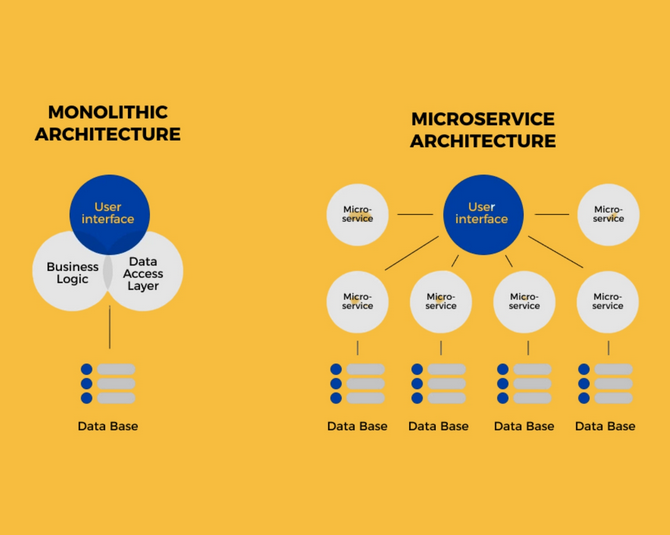
When building a mobile payment system, choosing the exemplary software architecture is crucial for ensuring scalability, flexibility, and performance. Two common architectural styles in the development of mobile payment systems are microservices and monolithic architectures. Each has its advantages and disadvantages, and the right choice depends on your business’s specific needs and long-term goals. Let’s explore the key differences between these two architectures and their impact on mobile payment systems.
1. What is a Monolithic Architecture?
A monolithic architecture is a traditional, unified approach where all the application components are integrated into a single codebase. In a monolithic system, the same service or application handles different functions, such as payment processing, user authentication, and reporting. This means that the mobile payment system is tightly coupled, and any changes to one part of the system often require changes to the entire application.
Advantages of Monolithic Architecture:
- Simplified Development: Since everything is contained within a single codebase, development is often easier and faster for small teams. It can be a good fit for small mobile payment systems or startups that need to build a product quickly.
- Easier to test: Testing is straightforward because all components are integrated into one system, making it easier to perform end-to-end tests.
- Lower Operational Overhead: Deploying a monolithic application usually requires less infrastructure and fewer resources, which can be a cost-effective option for smaller businesses.
Disadvantages of Monolithic Architecture:
- Scalability Challenges: As the mobile payment system grows, scaling a monolithic application can become difficult. Since all components are interconnected, scaling one part of the system may require scaling the entire application, leading to inefficiencies.
- Limited Flexibility: Modifying or updating system parts can be challenging, especially when implementing new features or changing technologies. Every update to a single component can affect the entire system.
- Risk of Downtime: A failure in one part of the system can bring down the entire application, leading to more significant downtime and disruptions in service.
2. What is Microservices Architecture?
A microservices architecture breaks down the mobile payment system into more minor, independent services, each responsible for a specific functionality. For example, separate services might be provided for payment processing, fraud detection, user authentication, and notifications. These microservices communicate with each other through APIs, allowing the system to operate as a cohesive unit.
Advantages of Microservices Architecture:
- Scalability: Microservices can be scaled independently based on demand. If payment processing requires more resources during peak periods, only the payment service is scaled without affecting the rest of the system. This leads to better resource utilization and performance.
- Flexibility: Since microservices are independent, developers can use different technologies and frameworks for each service. This allows for more flexibility in adopting new tools and updating specific services without affecting the whole system.
- Improved Reliability: In a microservices architecture, a failure in one service does not necessarily bring down the entire system. If the payment processing service encounters an issue, other services like user authentication can still operate, minimizing the impact of downtime.
Disadvantages of Microservices Architecture:
- Complexity: Microservices introduce additional complexity due to the need for multiple services, databases, and network communication. Developing and maintaining a microservices architecture requires skilled teams with expertise in distributed systems and API management.
- Operational Overhead: Managing multiple services, including monitoring, logging, and troubleshooting, can increase operational overhead. The infrastructure required to deploy and maintain microservices can be more expensive than that of a monolithic system.
- Data Consistency: Since each microservice may have its database, ensuring data consistency and synchronization between services can be more challenging.
3. Which Is Better for Mobile Payments?
The decision between microservices and monolithic architectures depends on your mobile payment system’s size, complexity, and growth expectations.
- A monolithic architecture can be a good starting point for small-scale mobile payment systems with limited features and a short development timeline. It’s easier to develop and test, and its simplicity may be more than enough for handling small to medium transactions.
- However, if your mobile payment system needs to scale quickly, support complex features, or handle high volumes of transactions, a microservices architecture is likely the better choice. Microservices’ scalability, flexibility, and improved reliability make them well-suited for large-scale applications that require frequent updates and the ability to handle multiple services simultaneously.
Conclusion
Both microservices and monolithic architectures have their place in mobile payment systems, and the right choice depends on your specific business needs and technical resources. While monolithic architectures are simple and cost-effective for smaller systems, microservices offer superior scalability, flexibility, and reliability for businesses with complex needs and growth potential. By understanding the pros and cons of each approach, you can make an informed decision that supports the long-term success of your mobile payment system.
#MobilePayments #Microservices #MonolithicArchitecture #TechArchitecture #PaymentSystems #Scalability #MobileTech #BusinessGrowth #PaymentProcessing #SoftwareDevelopment