
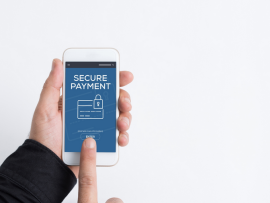

As mobile payments become more prevalent, ensuring transaction security is a top priority for businesses and consumers. Traditional payment methods rely on transmitting sensitive cardholder data, which increases the risk of fraud, hacking, and data breaches. To combat these threats, tokenization has emerged as a powerful security solution that protects payment information while maintaining a seamless user experience. This blog explores how tokenization enhances mobile payment security, reducing fraud risks and improving trust in digital transactions. 1. What is Tokenization? Tokenization is a security process that replaces sensitive payment data (such as credit card numbers) with a unique, randomly generated token. This token has no real value and cannot be used outside the specific transaction or system it was created for. How It Works: When customers make a mobile payment, their card details are sent to a tokenization service. The service replaces the card number with a secure token. The token processes the payment, while the original card details are securely stored in a vault. If a hacker intercepts the token, it is useless without the decryption key held by the payment provider. 2. Key Benefits of Tokenization in Mobile Payment Security a. Protects Cardholder Data from Cyber Threats Since actual card details are never transmitted or stored on a mobile device, tokenization significantly reduces the risk of data breaches and theft. Even if a hacker gains access to a..
Read More
Excellent user experience (UX) design doesn’t come from guesswork—it’s built on data. While creativity and intuition are essential, designing digital products that truly connect with users requires a clear understanding of how people interact with your platform. That’s where analytics comes in. In today’s digital landscape, data-driven UX design has become a key strategy for creating interfaces that are not only visually appealing but also functional, user-friendly, and aligned with user behavior. Here's how analytics shapes better UX—and how to use it effectively. 1. Understanding Real User Behavior One of the most significant advantages of analytics is observing how users interact with your product—not how you think they do. Tools like Google Analytics, Hotjar, and Mixpanel can show you: Which pages users visit most (and least) Where users drop off in a process (like checkout) What devices do they use How long they stay on a page Where they click, scroll, or get stuck This kind of data is gold for UX designers. It highlights friction points, confusing layouts, and features that might not work as intended. 2. Validating Design Decisions Instead of relying on assumptions, data helps validate design choices. For example, say you redesign your homepage CTA (call to action) button to be more prominent. With analytics, you can track whether click-through rates increased after the change. If not, you can compare the results with a different layout,..
Read More
As mobile payments become increasingly popular, businesses must ensure their payment systems can scale seamlessly to meet the growing demand. Traditional payment systems often struggle to handle high volumes of transactions, especially during peak periods, leading to delays, errors, or even system downtime. Cloud-native mobile payment solutions, however, provide a modern, flexible, and scalable approach to handling these challenges. By building a cloud-native architecture, businesses can ensure that their mobile payment solutions are efficient, future-proof, and capable of handling increased traffic. Here’s how to build scalable, cloud-native mobile payment solutions that can grow with your business. 1. Embrace Cloud-Native Architecture A cloud-native approach leverages cloud computing principles and technologies to build applications optimized for scalability, flexibility, and efficiency. This includes using microservices, containers, and Kubernetes, all of which enable the application to scale dynamically and respond to fluctuations in demand. Microservices: Instead of using a monolithic approach, where all functions are tied together in one application, microservices allow each component of the payment solution to operate independently. This modular approach makes it easier to scale specific system parts, such as payment processing or fraud detection, without affecting the entire solution. Containers and Kubernetes: Containers package applications into isolated environments, making them easier to deploy and manage across different cloud platforms. Kubernetes is an open-source platform that automates container deployment, scaling, and management, ensuring your payment system can scale seamlessly with..
Read More
The rise of mobile payments has revolutionized how people transact, offering speed, convenience, and security. For businesses looking to integrate mobile payment solutions, ensuring the system is reliable, user-friendly, and secure is crucial. A successful mobile payment solution requires a combination of several key components that work seamlessly together. Here’s a breakdown of the essential elements that make a mobile payment system efficient and effective for businesses and consumers. 1. User-Friendly Interface A mobile payment solution needs to be intuitive and easy to navigate. Customers should be able to make payments quickly without unnecessary steps or complicated processes. A clean, simple user interface (UI) enhances the overall experience, encouraging adoption and repeat usage. To create a user-friendly interface, prioritize the following: Simple navigation: Making a payment should be quick and straightforward, ideally requiring minimal taps. Clear information: Display transaction details clearly, such as the amount, recipient, and payment method. Customization: Users can personalize the app or payment settings according to their preferences, such as default payment methods or preferred currency. 2. Security Features Security is one of the most critical aspects of any mobile payment solution. With the rise of digital transactions, customers are increasingly concerned about the security of their personal and financial data. A robust mobile payment system must include advanced security features to protect users and businesses. Key security components include: Encryption: Use end-to-end encryption to secure..
Read More
In today’s fast-paced digital world, mobile payment apps have become a core part of how consumers shop, send money, and manage their finances. However, as the demand for these apps grows, so do user expectations. People want payment apps that are not only secure, functional but also intuitive, fast, and enjoyable to use. This is where user-centric design comes in—a vital approach that puts the needs, preferences, and behavior of the user at the heart of the development process. 1. What Is User-Centric Design? User-centric design (UCD) is a philosophy focused on creating solutions that provide the best possible experience for the end user. It involves understanding user goals, pain points, and behaviors through research, testing, and continuous feedback. In the context of mobile payment apps, this means designing every element—from login screens to transaction flows—with the user in mind. 2. Why It Matters in Mobile Payments Mobile payment apps handle sensitive financial transactions, so users must feel confident and comfortable navigating them. If the interface is confusing or the process feels clunky, users are likely to abandon the app altogether. UCD helps ensure the app is easy to understand, smooth to use, and delivers a frictionless experience. An app built around user needs is more likely to gain trust, reduce transaction errors, and encourage repeat use. Whether paying a friend, checking a balance, or making a purchase, the user..
Read More
The world of cryptocurrency has evolved from a niche digital asset to a mainstream financial instrument. As digital currencies such as Bitcoin, Ethereum, and Litecoin gain popularity, integrating them into mobile payment systems has the potential to revolutionize how people make transactions. The integration of cryptocurrency into mobile payment platforms offers a range of benefits, from faster transactions to increased security, but also presents new challenges. Let’s explore the role of cryptocurrency in mobile payment systems, the advantages it brings, and the challenges it presents. 1. Speed and Efficiency One of the key advantages of using cryptocurrency in mobile payments is the potential for faster transactions. Traditional banking systems can take hours, or even days, to process payments, especially in cross-border transactions. In contrast, cryptocurrency transactions can be processed in minutes, thanks to the decentralized nature of blockchain technology. This speed not only benefits consumers but also merchants who can receive payments instantly, improving cash flow. Why it matters: Quick transfers: Cryptocurrency payments enable faster and more efficient transactions, especially across borders. Reduced waiting times: Consumers and businesses no longer need to wait for lengthy banking processes to complete a transaction. 2. Lower Transaction Fees Traditional mobile payment systems often come with substantial transaction fees, especially for cross-border payments. Cryptocurrency can significantly reduce or even eliminate these fees. Since cryptocurrencies bypass traditional financial intermediaries, fewer intermediaries are involved in processing..
Read More
The arrival of 5G technology is poised to bring significant changes to various sectors, and one area most impacted is mobile payments. With faster speeds, lower latency, and more reliable connections, 5G promises to take mobile payment technologies to the next level. As 5G networks expand globally, businesses and consumers alike will experience improved transaction experiences and the introduction of innovative payment solutions. Here's how 5G is revolutionizing mobile payment technologies. 1. Faster Transaction Speeds One of the most significant advantages of 5G is its ability to enhance data transfer speeds. While 4G networks often experience delays during high-traffic times, 5G offers ultra-low latency and speeds up to 100 times faster than 4G. This improvement means that mobile payments can be processed almost instantly, significantly reducing transaction wait times. Whether you’re paying for a coffee, making a purchase at a retail store, or making an in-app purchase, 5G ensures a smoother and quicker transaction. Why it matters: Instant payments: 5G enables near-instantaneous transaction processing, enhancing convenience and customer satisfaction. Efficiency: Reduces the need for waiting or experiencing delays, especially during peak shopping hours. 2. Improved Security Mobile payment security is crucial, especially as digital transactions continue to increase globally. 5G technology introduces improved encryption protocols, which provide enhanced security for mobile payment systems. The faster speeds and more reliable connections offered by 5G enable stronger authentication methods, such as biometric..
Read More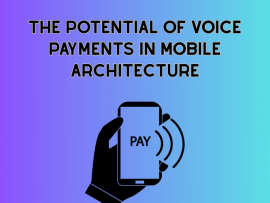
The world of mobile payments is evolving rapidly, with technology constantly pushing the boundaries of how we interact with digital services. Among the most exciting innovations is the rise of voice payments, which enable users to make transactions through voice commands. As mobile architecture becomes more advanced, integrating voice payment systems offers users new opportunities for making secure, seamless, and hands-free transactions. Let’s explore the potential of voice payments in mobile architecture and how they are reshaping the future of payments. 1. Seamless, Hands-Free Transactions Voice payments utilize voice recognition technology, enabling users to complete transactions simply by speaking to their mobile devices. This hands-free convenience can make purchasing products, paying bills, or transferring money as easy as asking your smartphone to do it. Whether you're driving, cooking, or multitasking, voice payments allow users to execute payments without having to touch or even look at their device, offering a level of convenience that traditional mobile payment methods can’t match. Why it matters: Convenience: Voice payments simplify transactions, allowing users to make payments while performing other tasks. Increased accessibility: For users with physical disabilities or those who struggle with typing, voice payments offer a more accessible way to engage in mobile transactions. 2. Enhanced Security Features Voice payments offer an extra layer of security through voice biometrics, a form of voice authentication that analyzes unique vocal characteristics. Unlike passwords or PINs,..
Read More
In today’s digital-first world, businesses face an ever-growing number of cyber threats, ranging from data breaches and ransomware attacks to advanced persistent threats. As these cyber risks continue to evolve, basic security measures are no longer enough. To survive and thrive in the face of increasing threats, businesses must build cyber resilience—a comprehensive approach to preventing cyberattacks, maintaining operations, and quickly recovering from disruptions. Here are some key strategies companies can use to develop and strengthen cyber resilience. 1. Implement a Robust Incident Response Plan An essential component of cyber resilience is having a well-defined and regularly tested incident response (IR) plan. This plan should outline specific steps for identifying, containing, and mitigating a cyberattack and protocols for restoring business operations as quickly as possible. An effective IR plan involves cross-functional teams from IT, operations, communications, and legal departments, ensuring a coordinated response across the organization. Testing and updating the plan regularly through tabletop exercises or simulations will help teams stay prepared when a real cyber event occurs. 2. Adopt a Proactive Cybersecurity Strategy Cyber resilience is built on proactive measures that reduce the likelihood and impact of cyber incidents. To safeguard networks and devices, businesses should adopt a multilayered cybersecurity strategy with strong firewalls, intrusion detection systems, and endpoint protection. Regular vulnerability assessments and penetration testing should be conducted to identify and address system weaknesses before attackers can exploit..
Read More
Cybersecurity threats are becoming more sophisticated and widespread in today's interconnected world. For organizations, ensuring robust cybersecurity goes beyond just implementing firewalls and antivirus software—it requires building a strong cybersecurity culture, a culture where every employee understands the importance of cybersecurity, follows best practices, and contributes to the organization's overall security posture. Here are some strategies for fostering a strong cybersecurity culture within your organization. 1. Leadership Commitment Building a cybersecurity culture starts with leadership. Senior executives and managers must demonstrate a strong commitment to cybersecurity and lead by example. When leaders prioritize cybersecurity, it sets the tone for the entire organization. This commitment should be reflected in company policies, resources allocated to cybersecurity, and consistent messaging about its importance. Leaders should regularly communicate the organization’s cybersecurity objectives and highlight how every employee plays a role in maintaining a secure environment. 2. Regular Cybersecurity Training Education and awareness are key to building a cybersecurity-conscious workforce. Regular training should be provided to all employees, regardless of their role in the organization. This training should cover essential topics such as identifying phishing emails, creating strong passwords, understanding the risks of public Wi-Fi, and proper data handling techniques. Role-specific training for employees handling sensitive data or IT systems should be more in-depth. Cybersecurity training should be conducted regularly, with periodic refreshers to ensure employees stay up-to-date with emerging threats. 3. Create Clear Policies..
Read More